Nestled along the stunning southern coast of Portugal, Carvoeiro is one of the Algarve's most beloved coastal villages. This former fishing settlement has evolved into a sought-after destination for tourists and expats while retaining its authentic Portuguese charm and intimate village atmosphere. With dramatic ochre cliffs framing a horseshoe-shaped bay, pristine beaches within walking distance, and a thriving international community, Carvoeiro offers an enviable quality of life. The village combines traditional whitewashed architecture with modern amenities, excellent restaurants serving fresh seafood, and easy access to world-class golf courses. Whether you're planning a holiday, considering relocation, or simply exploring the Algarve's hidden gems, Carvoeiro presents a compelling blend of natural beauty, convenience, and Mediterranean warmth that has captured the hearts of visitors from around the world.
Visão Geral
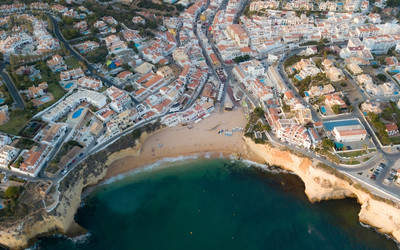
Carvoeiro is a compact coastal village situated in the municipality of Lagoa, in the central Algarve region of Portugal. The town centers around a small, sheltered beach surrounded by striking golden limestone cliffs that have become an iconic symbol of the Algarve coastline. Unlike some of the region's larger resort towns, Carvoeiro has maintained a human scale and village feel, with most amenities within easy walking distance. The town sits approximately 5 kilometers south of Lagoa and roughly 60 kilometers from Faro Airport, making it accessible yet peacefully removed from mass tourism. The surrounding area features dramatic coastal scenery, including the famous Algar Seco rock formations, numerous hidden coves, and the stunning clifftop boardwalk that connects to neighboring beaches. Carvoeiro's compact layout, pedestrian-friendly streets, and concentration of services make it particularly attractive to retirees, families, and anyone seeking a relaxed coastal lifestyle with easy access to both natural beauty and modern conveniences.
História
Carvoeiro's history stretches back centuries as a traditional fishing village, with its name derived from the carob trees (alfarrobeiras in Portuguese) that once dotted the landscape. For generations, local families made their living from the sea, and fishing boats were pulled up onto the small beach that remains the town's focal point. The village remained relatively isolated and undeveloped until the 1960s and 1970s, when Portugal's Algarve region began attracting international tourists seeking sun, sea, and affordability. Unlike Albufeira or Vilamoura, Carvoeiro's development proceeded more gradually and on a smaller scale, partly due to its clifftop geography and limited beach access. This slower growth helped preserve the village character that makes it distinctive today. Throughout the 1980s and 1990s, Carvoeiro attracted a growing community of British, Dutch, German, and other European expats, many of whom purchased holiday homes or retired permanently to the area. Today, while tourism is central to the local economy, Carvoeiro has successfully balanced visitor accommodation with residential life, maintaining its identity as a village rather than becoming an anonymous resort.
Atmosfera
Carvoeiro exudes a relaxed, friendly atmosphere that balances its dual identity as both a residential village and a tourist destination. The compact town center features narrow cobbled streets lined with traditional Portuguese buildings painted in white and cheerful colors, housing restaurants, cafés, bars, and independent shops. During summer months, the village buzzes with activity as visitors fill the beaches and waterfront restaurants, yet it never feels overwhelmingly crowded thanks to its small scale. In the shoulder seasons and winter, Carvoeiro reveals its quieter side, when the year-round expat and Portuguese communities take center stage and the pace of life slows considerably. The international makeup of the population creates a welcoming, cosmopolitan feel—you'll hear multiple languages spoken in the streets, and many businesses cater naturally to both Portuguese and international residents. Despite this international flavor, Carvoeiro hasn't lost its Portuguese character: local festivals are celebrated, traditional restaurants serve authentic cuisine, and Portuguese families continue to live and work in the area. The overall vibe is unpretentious and sociable, with a strong sense of community among long-term residents who appreciate the village's natural beauty and laid-back coastal lifestyle.
O Que Fazer
Carvoeiro and its surroundings offer diverse activities spanning outdoor adventures, cultural experiences, and leisurely pursuits. The coastline is the star attraction—beyond Carvoeiro's main beach, the area boasts numerous stunning coves including Praia do Paraíso, Praia da Marinha (consistently ranked among Europe's most beautiful beaches), and Praia de Benagil with its famous sea cave. Boat tours departing from Carvoeiro provide access to these caves and hidden beaches, with options ranging from large tour boats to private kayak excursions. The Algar Seco rock formations, located a short walk from the village center, feature dramatic eroded cliffs, natural arches, and viewing platforms—a must-see geological wonder. The Seven Hanging Valleys Trail, one of the Algarve's premier coastal walks, passes through Carvoeiro and offers spectacular clifftop hiking. For golf enthusiasts, the area is paradise, with numerous championship courses including Vale de Milho, Gramacho, and Pinta within 10 minutes' drive [VERIFY]. Water sports including stand-up paddleboarding, snorkeling, diving, and fishing are popular, with equipment rental and instruction available. The nearby towns of Silves (with its Moorish castle) and Monchique (mountain town with thermal springs) provide cultural day trips. Carvoeiro's restaurant scene is excellent, ranging from traditional Portuguese tascas to international cuisine, with clifftop dining offering sunset views. The village hosts occasional festivals and events, particularly during summer. Wine tasting tours, spa treatments, tennis, and cycling are all accessible. For families, water parks, zoos, and beaches with calm waters provide entertainment. The combination of natural beauty, outdoor activities, cultural heritage, and dining makes Carvoeiro an engaging place to live or visit, with something to suit all ages and interests year-round.
Destaques Locais
Dicas Práticas
When planning your move to or visit in Carvoeiro, consider these practical insights: Summer (June-September) brings warm weather, busier beaches, and higher accommodation prices, while shoulder seasons (April-May, October-November) offer excellent weather with fewer crowds—ideal for house hunting or extended stays. Winter remains mild but quieter, with some restaurants closing seasonally. For residency, EU citizens can move freely, while non-EU nationals should research visa requirements (D7 passive income visa and Golden Visa are popular routes). Opening a Portuguese bank account is essential for residents and can be done with passport, proof of address, and tax number (NIF), which you'll need for property transactions, utilities, and official matters. The NIF can be obtained from local tax offices (Finanças) or through a lawyer. Portuguese bureaucracy can be slow, so patience and persistence are valuable—many expats hire a lawyer or gestor to navigate property purchases and residency processes. Learning basic Portuguese is highly recommended and greatly appreciated by locals, even though English is widely spoken in Carvoeiro. Register with the local town hall (Junta de Freguesia) and health center upon arrival. Car insurance, property insurance, and health insurance are important considerations. Carvoeiro's water is safe to drink, though many prefer bottled or filtered water. The village is very safe with low crime, though standard precautions apply. Finally, connect with expat groups and community organizations—the established international community is welcoming and provides invaluable practical advice and social connections that smooth the transition to life in this beautiful corner of Portugal.
Viver Aqui
Daily life in Carvoeiro centers around the village's compact core, where most essential services are within a short walk. The town offers several supermarkets including Mini Mercado and Apolonia, which stock both Portuguese and international products to serve the expat community. Fresh produce, fish, and local specialties can be found at the weekly market in nearby Lagoa. Housing options range from traditional Portuguese villas to modern apartments and townhouses, with many properties offering sea views due to the clifftop topography. [VERIFY] Property prices tend to be higher than inland areas but generally remain more affordable than premium developments in Quinta do Lago or Vale do Lobo. The cost of living is moderate by European standards—lower than Northern Europe but higher than Portugal's interior regions. Utilities, internet, and mobile services are reliable and reasonably priced. The international community is well-established, with numerous social clubs, activities, and support networks for newcomers. English is widely spoken in shops, restaurants, and service businesses, though learning Portuguese is appreciated and enhances integration. The climate is one of Carvoeiro's greatest assets, with over 300 days of sunshine annually, mild winters, and warm, dry summers. The village attracts a diverse demographic, including retirees, remote workers, families, and lifestyle entrepreneurs, all drawn by the combination of natural beauty, safety, convenience, and quality of life that Carvoeiro offers.
Compras
Shopping in Carvoeiro covers daily essentials comfortably, though larger shopping trips typically involve visiting nearby towns. Within the village, you'll find several well-stocked supermarkets including Mini Mercado and Apolonia, which carry fresh produce, meat, fish, Portuguese products, and an increasingly international selection reflecting the expat population. These shops are sufficient for everyday grocery needs, though prices may be slightly higher than larger supermarkets in Lagoa or Portimão. The village center features numerous small shops selling beachwear, souvenirs, gifts, and holiday essentials, alongside a few boutiques offering clothing and accessories. For more extensive shopping, the town of Lagoa (5 kilometers away) offers larger supermarkets including Continente, Pingo Doce, and Lidl, where prices are more competitive and selection broader. Lagoa also hosts a traditional weekly market where locals shop for fresh produce, fish, cheese, olives, and regional products—an authentic and economical shopping experience. For international products, home goods, and department store shopping, Portimão's retail parks and shopping centers (approximately 15 kilometers west) provide brands like IKEA-style furniture stores, electronics retailers, and fashion outlets. The Aqua Portimão shopping center offers cinema, restaurants, and international brands. Fresh fish can be purchased directly from fishermen at Carvoeiro beach on some mornings, and bakeries (padarias) throughout the village provide fresh bread and pastries daily. Pharmacies, banks, and essential services are all represented in Carvoeiro. While the village lacks large-scale retail, the combination of local shops and proximity to Lagoa and Portimão means residents can access everything they need with minimal inconvenience.
Como Chegar
Carvoeiro is accessible but somewhat reliant on private transport for maximum convenience. The village itself is highly walkable, with most amenities, beaches, and restaurants reachable on foot. However, for shopping, healthcare, and broader exploration of the Algarve, having a car is highly advantageous. The nearest major town is Lagoa, approximately 5 kilometers north, where you'll find additional services, the train station, and larger supermarkets. Faro Airport is roughly 60 kilometers east, typically a 45-50 minute drive via the A22 motorway, with direct flights connecting to numerous European cities year-round. Public transport exists but is limited—local buses connect Carvoeiro with Lagoa, Portimão, and other nearby towns, though services are infrequent, particularly outside summer months [VERIFY]. Taxis and ride-sharing services are available for airport transfers and local journeys. The regional train line runs along the coast through Lagoa station, connecting to Faro, Lagos, and beyond, offering a scenic alternative for day trips. For those without cars, many expats use bicycles or electric bikes for local errands, and several car rental agencies operate in the area for occasional use. The nearby towns of Ferragudo, Portimão, and Silves are all within 10-15 kilometers, expanding access to amenities, entertainment, and cultural attractions. Overall, while Carvoeiro's location is convenient and well-connected by Portuguese standards, most residents find that owning or having regular access to a vehicle significantly enhances daily life and independence.
Educação
Education options in and around Carvoeiro cater to both Portuguese and international families. For international education, the Nobel International School Algarve is located in Lagoa, approximately 10 minutes' drive from Carvoeiro, offering British curriculum education from early years through secondary levels leading to IGCSEs and A-Levels [VERIFY]. This school is popular among expat families and provides instruction in English with a multicultural environment. The nearby town of Porches hosts a campus of the Escola Internacional do Algarve, another option for English-language education. For families preferring Portuguese state education, several primary and secondary schools operate in Lagoa and surrounding areas, providing free education following the Portuguese national curriculum—an excellent option for families committed to long-term integration and language development. Some international families choose this route for younger children, as Portuguese schools offer strong academic foundations and full language immersion. Private Portuguese schools are also available in the region. Additionally, the International School of the Algarve in Porches and Aljezur offers International Baccalaureate programs [VERIFY]. For very young children, several creches, nurseries, and pre-schools operate in Carvoeiro and Lagoa, including both Portuguese and international options. School transport is generally the responsibility of families, though some international schools offer bus services. The concentration of international schools reflects the Algarve's large expat population and makes the region, including Carvoeiro, a viable option for families with school-age children seeking quality education options.
Saúde
Healthcare in Carvoeiro and the surrounding area combines Portugal's public health system (SNS) with extensive private medical services catering to the international community. The nearest public hospital is Hospital de Lagoa, located approximately 6 kilometers away in the town of Lagoa, offering emergency services, general medicine, and specialist departments. For more complex medical needs, the larger Hospital de Portimão is roughly 15 kilometers west [VERIFY]. Portugal's public healthcare system is accessible to legal residents, including expats with residency permits, though some services may involve waiting periods. Many expats choose private health insurance to access private clinics and hospitals, which offer shorter wait times, English-speaking staff, and comprehensive services. Several private clinics operate in Carvoeiro itself and nearby Lagoa, providing general practice, dental care, physiotherapy, and specialist consultations. The Algarve region has invested significantly in medical infrastructure to serve its international population, and healthcare standards are generally high. English-speaking doctors are relatively common, particularly in private practice, though Portuguese language skills can be helpful for navigating public services. Pharmacies (farmácias) are well-stocked and staffed by knowledgeable pharmacists who can advise on minor ailments; several operate in Carvoeiro and Lagoa. Prescription medications are significantly less expensive than in many Northern European countries or North America. Emergency services can be reached by dialing 112. Overall, access to healthcare is considered good in Carvoeiro, with the combination of public and private options providing flexibility and quality care for residents and long-term visitors.